
with Noosa Electric Co — Trusted since 1973
Quick answer: The federal Cheaper Home Batteries Program applies an upfront discount to eligible home battery systems installed with accredited installers, cutting thousands off the sticker price with no income test and no separate application needed. From 1 May 2026 the discount is tiered by battery capacity, so the exact saving depends on system size and installation date — meaning the sooner you install, the more certain your rebate value.
If you’ve been putting off adding a battery to your solar system on the Sunshine Coast, the federal battery rebate has made the decision considerably more affordable than it was even twelve months ago — but the rules have also changed twice in the last year, and getting the timing and sizing right now matters more than it used to. Here’s exactly how the battery subsidy works, what it’s currently worth, and what Sunshine Coast homeowners need to check before signing a quote.
What Is the Cheaper Home Batteries Program?
The Cheaper Home Batteries Program is a federal scheme that began on 1 July 2025, extending the same Small-scale Renewable Energy Scheme mechanism that has underpinned Australia’s solar panel discount for over a decade. Rather than a cash rebate paid to you after installation, the discount is delivered through Small-scale Technology Certificates (STCs) that your installer creates and trades on your behalf — the saving is built into your quote up front, with no separate claim or paperwork required from the homeowner. In December 2025 the federal government expanded total program funding from an original $2.3 billion to $7.2 billion over four years, aiming to support more than two million battery installations by 2030.
How Much You Can Save
Since 1 May 2026, the rebate has been calculated in three capacity tiers rather than a flat rate across the whole battery:
- First 14kWh of usable capacity — full rebate rate applies
- 14kWh to 28kWh — approximately 60% of the full rebate rate
- 28kWh to 50kWh — approximately 15% of the full rebate rate
- Above 50kWh usable capacity — no additional rebate applies
In practice this means a typical household battery in the 10–14kWh range still captures the full benefit of the home battery subsidy, while oversized systems see rapidly diminishing returns per kilowatt-hour beyond that point. Our guide on federal battery rebate changes breaks down the tier structure in more detail, and our page on battery benefits covers how the saving compares against ongoing grid costs.
Why the Rebate Keeps Shrinking
The STC factor behind the rebate is scheduled to step down every six months rather than annually, a faster decline than the original program design. This mirrors how the solar panel STC scheme has tapered over the past decade — the earlier you install relative to each step-down date, the higher the certificate value locked in for your system. The rebate amount is fixed at the date of installation, not the date you request a quote, so a delay of even a few months can shift your system into a lower rate.
Is There a Queensland State Battery Rebate?
Queensland’s standalone state battery rebate scheme has closed, which means homeowners in Noosa and across the Sunshine Coast currently rely on the federal Cheaper Home Batteries Program alone rather than a stacked state-plus-federal discount. This differs from states like Western Australia, which still layers an additional state rebate on top of the federal one. For battery subsidy Queensland enquiries, the federal program is the relevant scheme to focus on.
Eligibility Requirements You Need to Meet
To qualify for the current rebate, a system generally needs to meet several conditions:
- The battery must be installed by an accredited Clean Energy Council installer
- The system must be connected to an existing or new solar installation — a standalone battery with no solar input does not qualify
- The battery must be VPP-capable, meaning it has the technical capability to participate in a Virtual Power Plant, even if you choose not to enrol in one
- There is no household income test, so eligibility is based on the system and installation, not the homeowner’s earnings
Our home battery subsidy page runs through the full eligibility checklist specific to Sunshine Coast installations, and our battery solutions hub covers system options that meet the current VPP-capability requirement.
Choosing the Right Battery Size
Because the rebate now tapers sharply above 14kWh, right-sizing has become more important than simply buying the largest battery available. A Sunshine Coast battery electrician can model your household’s actual daily and evening usage against your solar output to identify the capacity that maximises rebate value without paying for storage you rarely draw down. Our case study on a near off-grid Sungrow battery installation shows how this sizing process worked for one Sunshine Coast home, and our page on replacing an existing solar system covers battery retrofits for homes with older solar arrays.
What to Expect from Installation
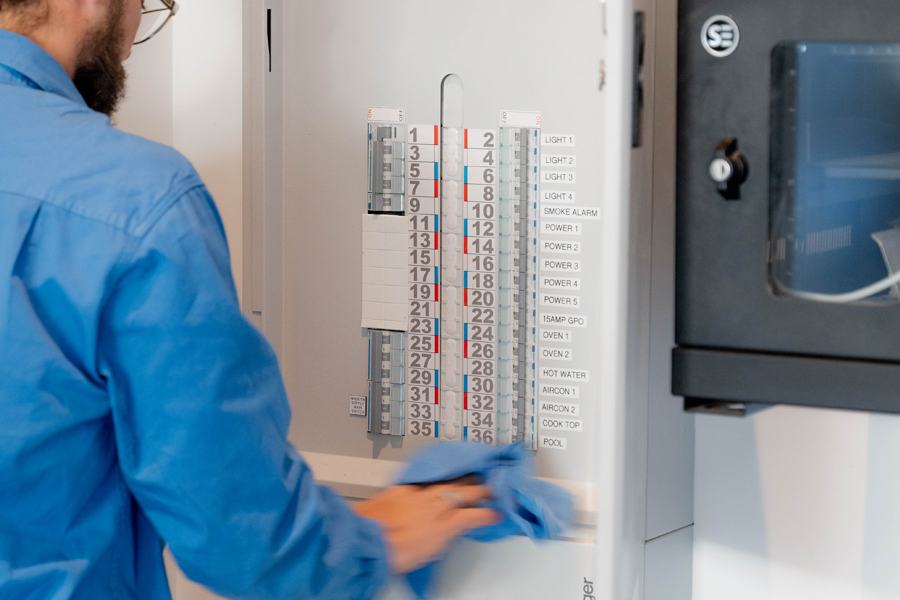
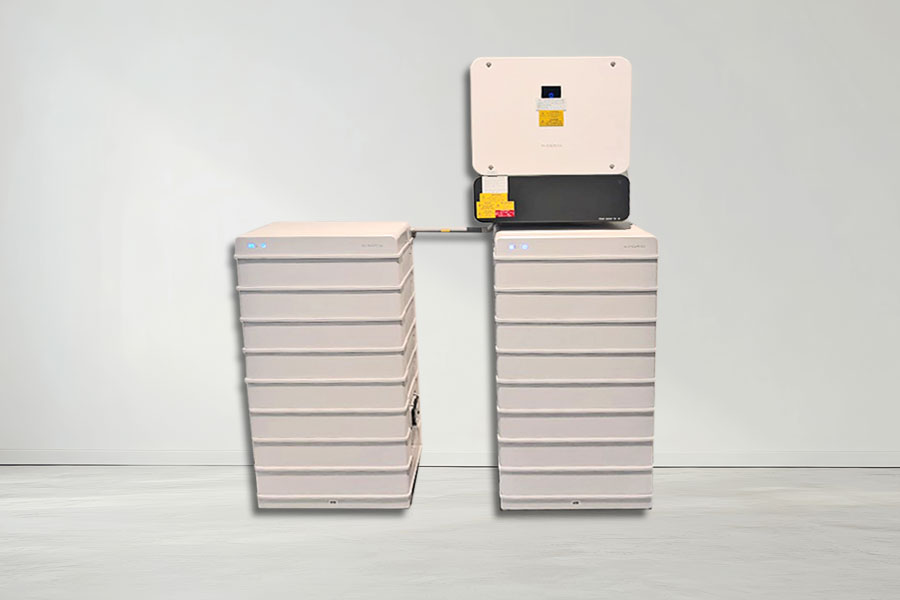
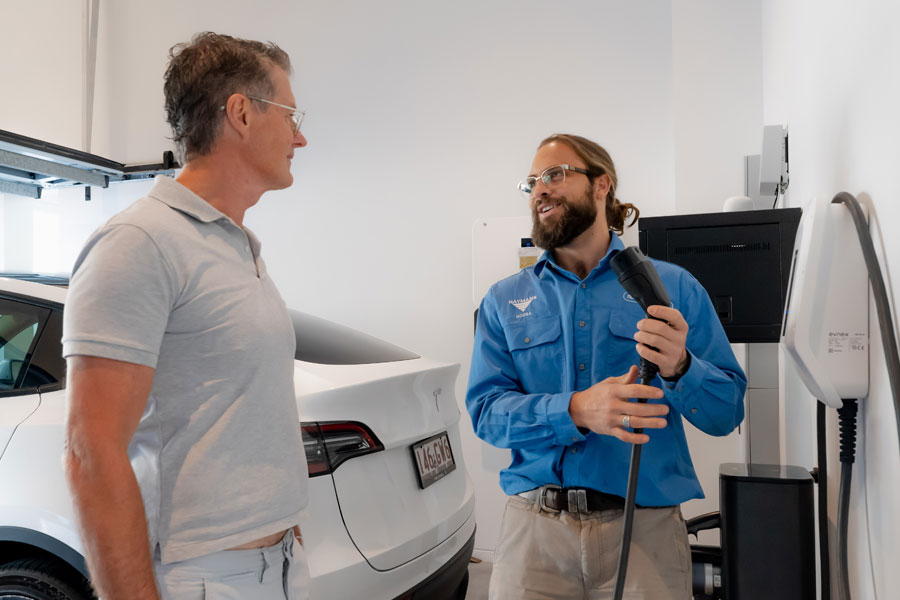
A typical home battery installation involves connecting the battery to your existing switchboard and solar inverter, configuring VPP-capable communications hardware, and commissioning the system so it charges from excess solar during the day and discharges during evening peak periods. Join our battery tour to walk through what this looks like on site, or check out our energy management solutions page covers how a battery fits into a broader electrification plan alongside EV charging or induction cooking.
Getting Started with Noosa Electric Co
Noosa Electric Co. has been servicing Sunshine Coast homes since 1973, and our accredited installers handle every step of a Noosa battery installation — from sizing the system correctly against current rebate tiers to lodging the STC paperwork so the discount is applied directly to your quote. Our Noosa solar solutions page and guide on why local licensed expertise matters explain what to look for in an installer before you commit.
Frequently Asked Questions
It’s a federal scheme, active since 1 July 2025, that applies an upfront discount to eligible home battery installations through the Small-scale Renewable Energy Scheme’s certificate system. The saving is built into your installer’s quote rather than paid to you afterward.
Since 1 May 2026, the discount is tiered: full rate on the first 14kWh of usable capacity, roughly 60% on the next 14kWh, and roughly 15% on capacity from 28kWh to 50kWh. The exact dollar value depends on your battery’s size and installation date.
Yes. The battery must be connected to an existing or newly installed solar system — a standalone battery with no solar generation does not meet the program’s eligibility requirements.
No. The Cheaper Home Batteries Program has no household income test, so eligibility depends on the system and installer meeting program requirements rather than the homeowner’s earnings.
No. Queensland’s state battery rebate scheme has closed, so homeowners on the Sunshine Coast currently access the federal rebate only, rather than a stacked state-and-federal discount.
Book Your Battery Rebate Assessment
The rebate is calculated at your installation date, so the sooner your system is sized and scheduled, the more certain your saving. Visit our battery solutions page to explore your options, or head to online bookings to arrange a battery assessment with a licensed Noosa Electric Co. electrician.