• Skip to primary navigation
  • Skip to main content
  • Skip to primary sidebar
  • Skip to footer

Learn about our Winter Maintenance Bundle – Save 30% | Get cashback on your Haier AC – Learn more

07 5449 7133 | service@noosaelectric.co
Book Online Contact Us

Noosa Electric Co.

Sunshine Coast Air Conditioning and Electrical

MENUMENU
  • Home
  • About
        • About Us
          • Our Team
          • Our History
          • Environmental Policy
          • Licences
          • Reviews
          • Careers
          • FAQ
        • Smoke Alarm Compliance Check
          • Smoke Alarm Compliance Check
        • Services
          • Air Conditioning
          • Electrical
          • Appliance
          • Refrigeration
          • Solar
          • Electrification
        • Commercial Electrician
          • Commercial Electrician
        • SPARE PARTS

          All Spare Parts Enquiries
        • Online Bookings
          • Make a booking
          • Service Info & Pricing
          • Terms and Conditions
        • Contact Our Team

          service@noosaelectric.co
          07 5449 7133
        • Latest News:

          Smoke Alarm Placement: Most QLD Homes Get This Wrong (And 2027 Makes It Law)

          Ask most homeowners where their smoke alarms are, and you’ll usually get a shrug. “One in the hallway, I think?” is the most common answer we hear — and it’s exactly the kind of setup that’s about to become non-compliant.

  • Services
        • Electrical
          • Noosa Electrician
          • Maintenance & Repairs
          • Installations
          • Tagging & Testing
          • Compliance
          • Safety Audits
          • Smoke Alarms
          • Spare Parts
          • Lighting
          • Cooling Solutions
          • Ceiling Fans
          • Power Points
          • Data Cabling
          • RCD
          • Switchboards
          • Surge Protection
          • Power Outages
        • Air Conditioning
          • Sales & Installation
          • Repairs / Warranty Repairs
          • Cleaning, Servicing & Maintenance
          • Spare Parts
          • Upgrades
          • Design
          • FAQ
        • Solar Solutions
          • Sales & Information
          • EV Charging Solutions
          • Battery Solutions
          • Home Battery Subsidy
          • Electrification
        • Appliance
          • Sales & Installation
          • Check Brand Service Status
          • Servicing & Maintenance
          • Repair
          • Spare Parts
        • Smoke Alarms
          • Get a Smoke Alarm Quote
          • Smoke Alarm Info & Resources
          • Smoke Alarm Compliance Check
        • Refrigeration
          • Sales & Installation
          • Servicing & Maintenance
          • Spare Parts
          • Repair
        • Spare Parts
          • Order Spare Parts
          • Our Spare Parts Service
  • FAQ
  • Property Management
  • Contact Us

Air-Conditioning Blog

Bulkhead Vs Split System AC – What’s the Difference?

When it comes to air-conditioner services on the Sunshine Coast, homeowners and business owners often find themselves comparing bulkhead systems and split system air-conditioners. Both options can deliver efficient cooling, but they’re designed for different spaces and needs.

At Noosa Electric Co, we provide expert air-conditioning services across the Sunshine Coast and Noosa, including sales, installation, maintenance, and repairs. If you’re unsure which air-conditioning solution best suits your home or business, our qualified technicians can assess your space and recommend the most efficient, cost-effective option.

Make an Air-Conditioning Enquiry
Experienced Electrical Team – Sunshine Coast

The Main Distinction:

Understanding the difference between a bulkhead and a split system air-conditioner can be confusing, especially since manufacturers often use similar terminology. The key difference lies in the installation and design of the indoor unit.

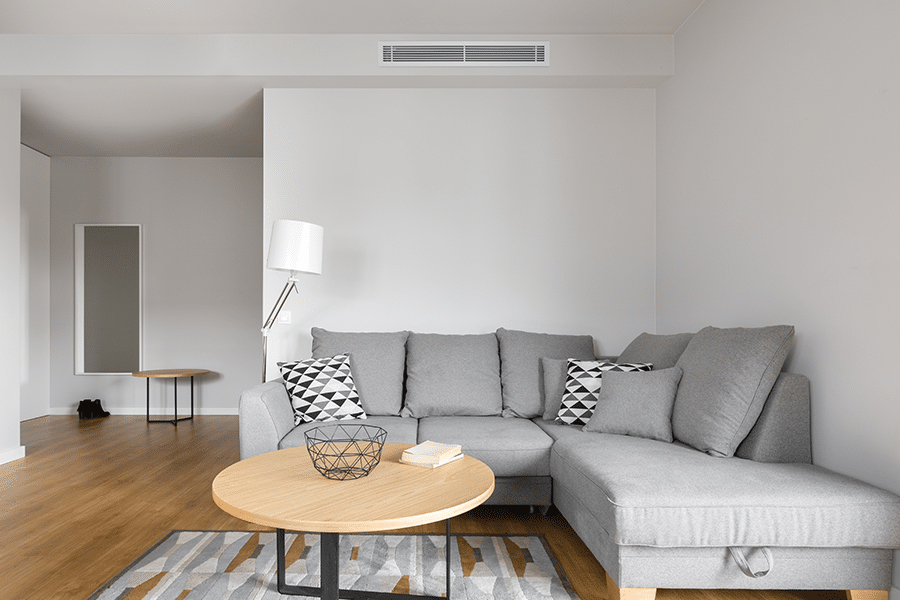
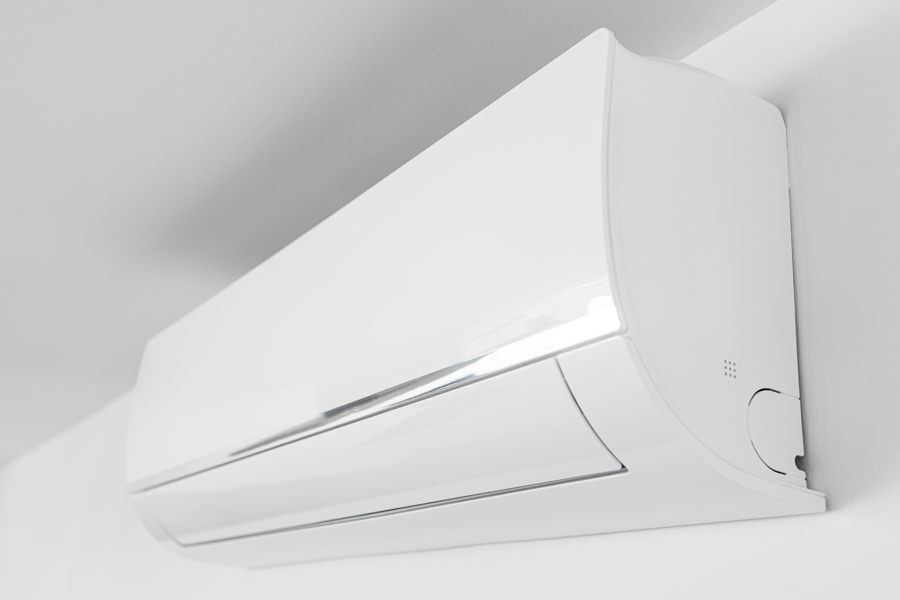
A bulkhead air-conditioner is built into a wall or ceiling cavity, usually within a drop ceiling or false wall. This creates a streamlined, discreet appearance, perfect for modern or minimalist interiors.

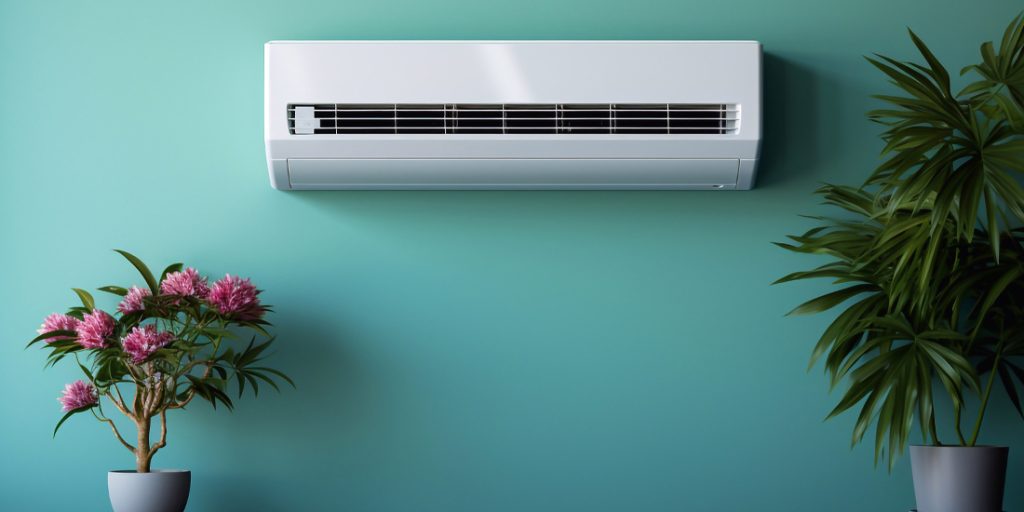
A split system air-conditioner, on the other hand, has an indoor unit mounted visibly on the wall. It’s the more common system used in homes across the Sunshine Coast due to its flexibility and affordability.

Bulkhead Air-Conditioner Installation
Split System Air-Conditioner Installation

Implications of an Integrated Solution

Because bulkhead air-conditioners are built into the structure, they deliver a clean and unobtrusive finish. However, they require integration during a new build or major renovation—making them ideal for property owners designing a space from scratch.

In contrast, split system air-conditioners can be retrofitted into nearly any existing home or commercial building. This makes them a versatile and cost-effective choice for anyone wanting to add efficient cooling without major construction.

If you’re considering upgrading your air-conditioning in Noosa or the wider Sunshine Coast, our experienced electrical and installation team can help you compare your options. Learn more about AC options in this article.

Air-Conditioning Electricians Noosa

3 Similarities Between Bulkhead and Split System Air-Conditioners

  1. Cooling Capacity
    Both bulkhead and split system ACs efficiently cool indoor spaces by using refrigerant cycles to absorb heat indoors and release it outdoors.
  2. Energy Efficiency
    Modern air-conditioners—whether bulkhead or split—are designed with energy-saving technologies such as inverter compressors and programmable thermostats. This helps reduce electricity costs while keeping your space comfortable all year round.
  3. Customisation
    Both systems come in various capacities, styles, and configurations, allowing you to tailor your air-conditioning to the specific size and layout of your room or premises.

3 Differences Between Bulkhead and Split System Air-Conditioners

  1. Flexibility
    Bulkhead systems require more planning and are best suited for fixed installations during construction. Split systems offer greater flexibility, as they can be installed in nearly any room with minimal structural changes.
  2. Cost
    Bulkhead installations are typically more expensive due to the extra work involved in concealing the unit. Split systems are usually more budget-friendly, offering excellent performance without structural modification.
  3. Maintenance
    Accessing bulkhead units for repairs or servicing can be more complex, whereas split systems are easier to maintainthanks to their exposed indoor unit and separate outdoor compressor. Regular servicing ensures both systems perform efficiently and extend their lifespan.

Air-Conditioning Services on the Sunshine Coast & Noosa

Whether you need a new air-conditioner installed, a system serviced, or repairs on your existing unit, our licensed technicians are here to help. We service all major brands and models and offer prompt, reliable support across the Sunshine Coast, including Noosa, Maroochydore, Coolum, and Caloundra.

Our team prides itself on great communication, transparent pricing, and top-quality workmanship — ensuring your cooling system performs efficiently through the Sunshine Coast’s warm and humid months.

Great communication is our standard procedure.

What’s the Right Solution for Your Home?

Choosing the perfect air-conditioning system depends on your property layout, budget, and comfort goals. Whether you prefer the seamless look of a bulkhead system or the flexibility of a split system, we’ll guide you through the process from start to finish — including design, supply, installation, and ongoing maintenance.

Contact our team today to discuss your air-conditioner services in Noosa and the Sunshine Coast. Let’s help you stay cool, comfortable, and energy-efficient all year round.

Make an Air-Conditioning Enquiry

When is the Best Time of Year to Clean my Air-Conditioner?

Noosa Air-Conditioning Services
Book an Air-Conditioning Clean & Service

Have you ever wondered when the best time of year to clean your AC might be? We recommend Spring – between September and November. If you live in Noosa or nearby on the Sunshine Coast, please contact our team for assistance with giving your air-conditioner a Spring Clean. Our team is licensed and experienced, and ready to assist with your AC cleaning solution.

The Benefits of Cleaning Your Air-Conditioner

There are three main benefits of cleaning your air-conditioner unit on a regular basis: health, efficiency and longevity.

Health Reasons

You Don’t Want to Breathe This Air..

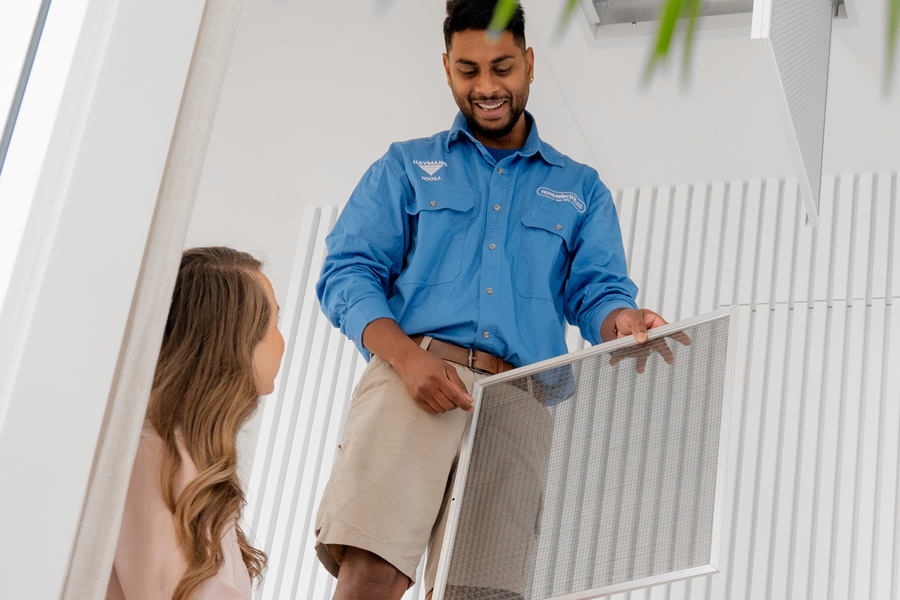
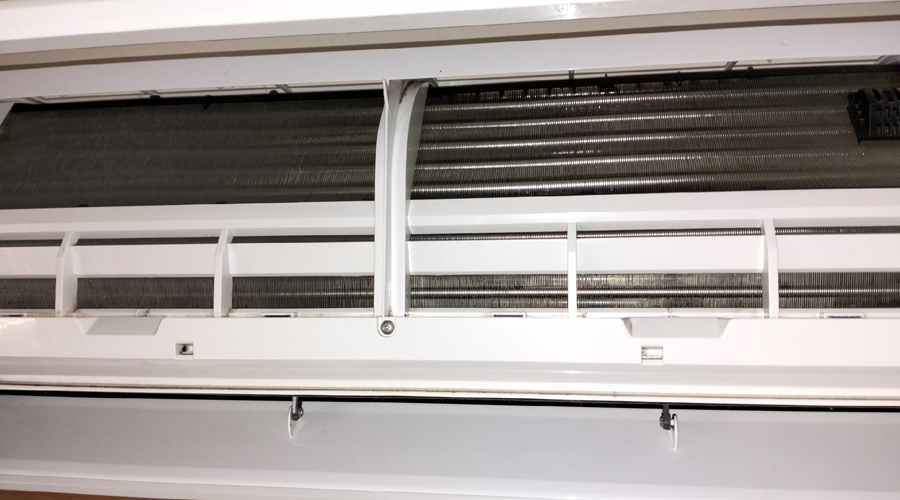
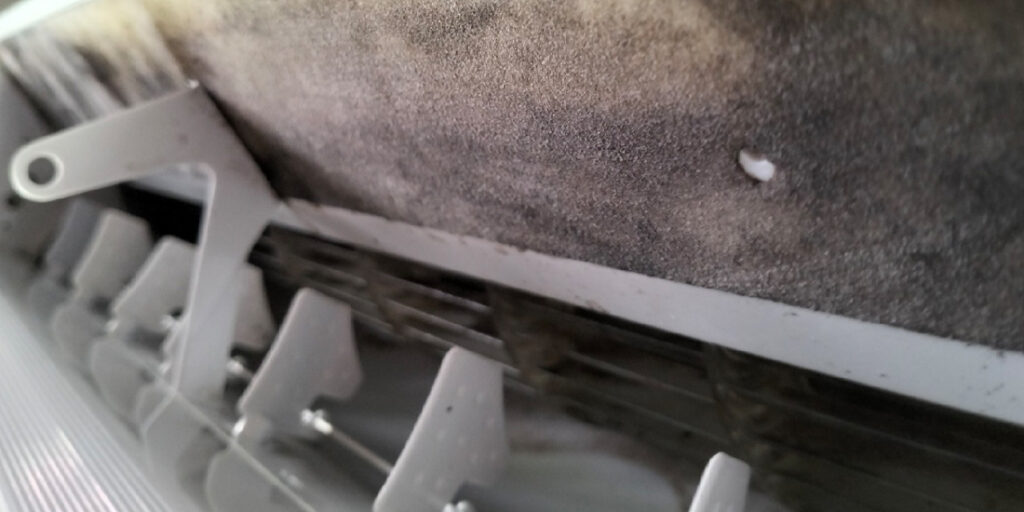
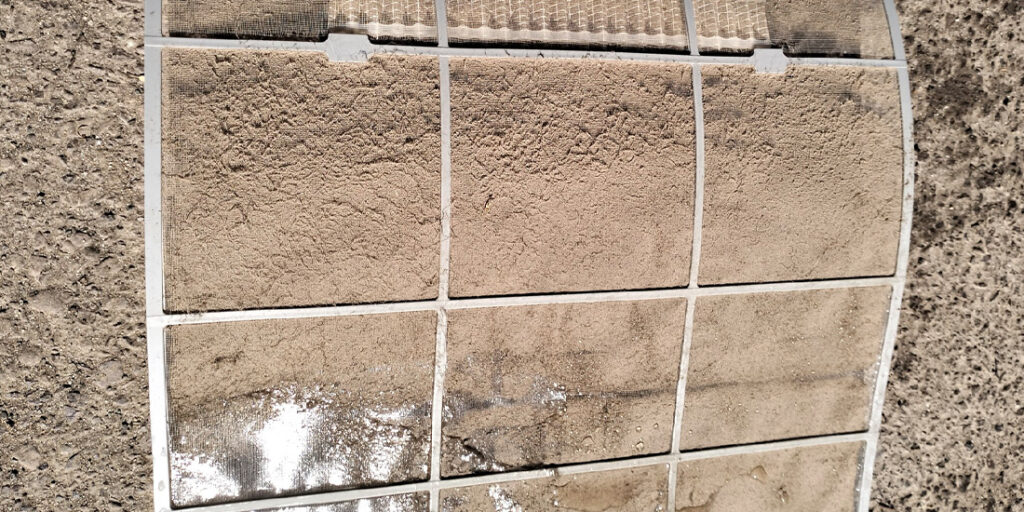
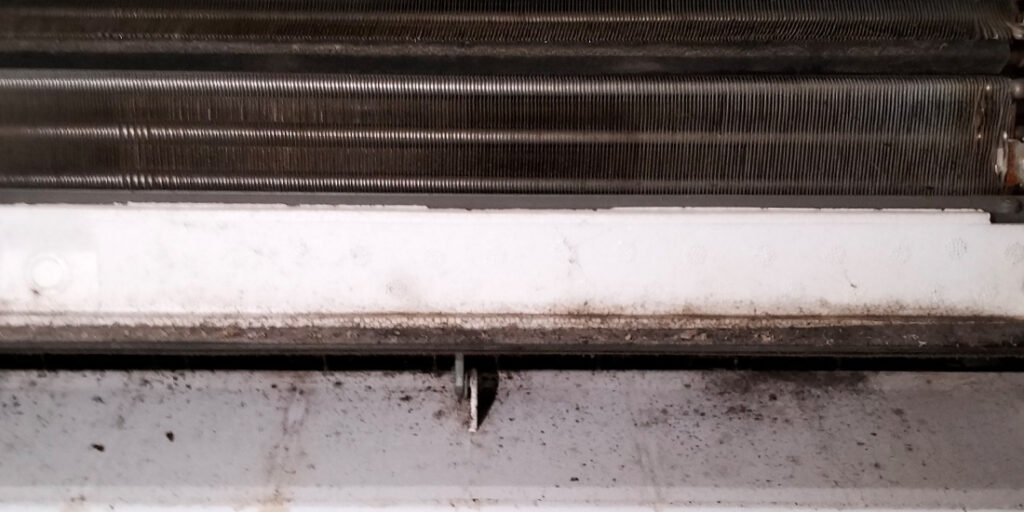
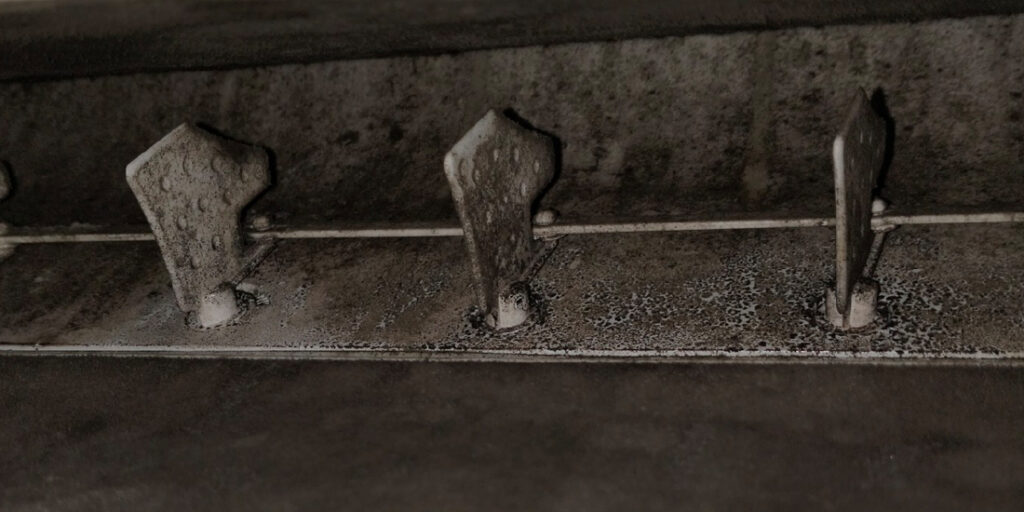
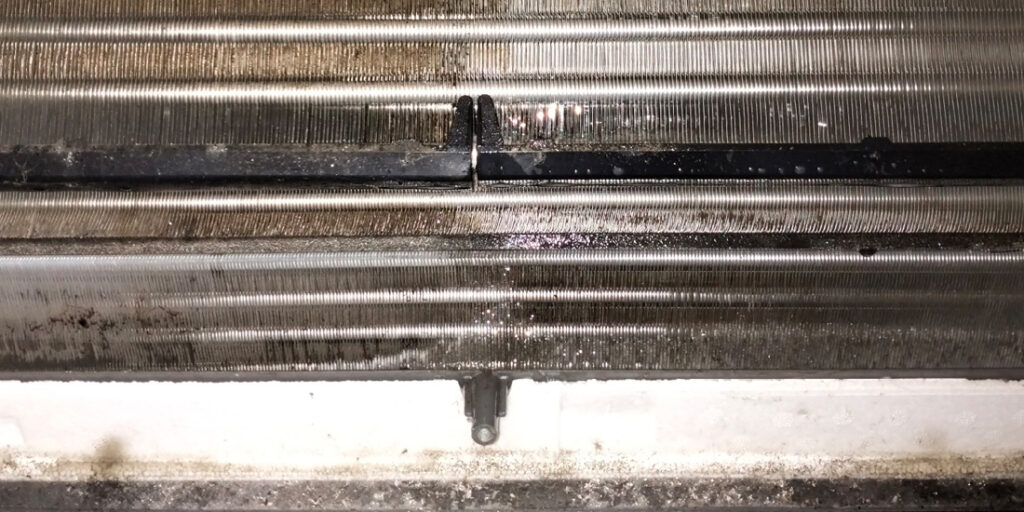
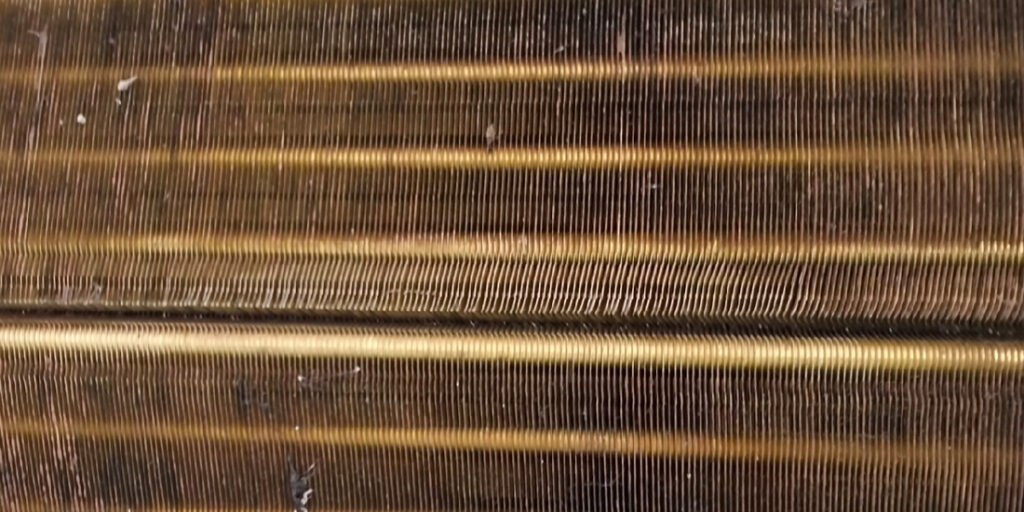
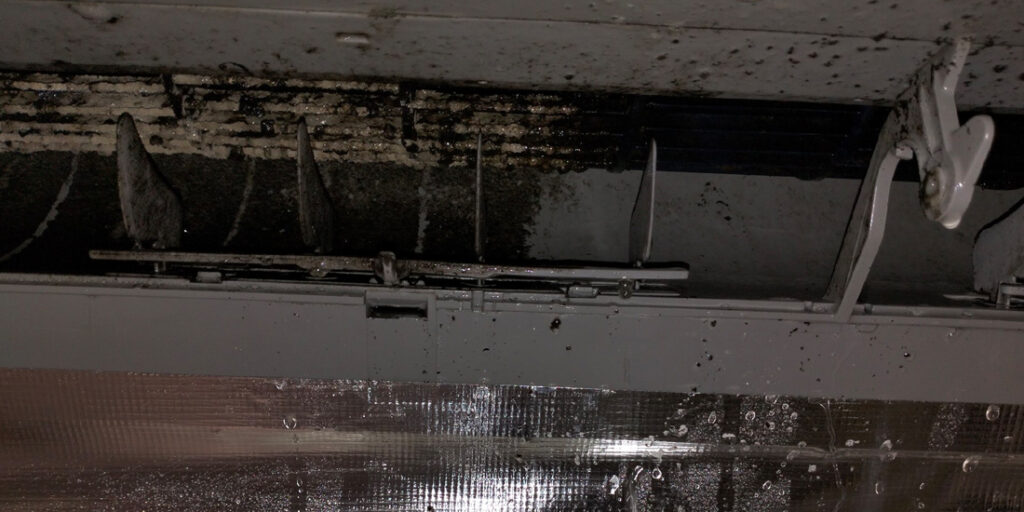
Over time, use of your air-conditioner creates a build-up of dirt and mould inside the unit’s filters. After a point, this buildup begins to affect the quality of the air being moved through the unit. This happens faster in places of high humidity such as the Sunshine Coast, due to high humidity / moisture in the air.  Take a look at some ‘before’ pictures of air-conditioners below (prior to cleaning). Imagine breathing air that has run through these machines! Regularly cleaning the filters, which is part of an air-conditioner clean and service, resolves the problem.

Efficiency Reasons / Running Costs

A buildup of contaminants such as dirt and mould in your air-conditioner’s filters affect the efficiency of your air-conditioner. As the buildup increases, the machine needs to work harder to move air through the filters. This additional load increases running costs. Meanwhile, the machine is circulating sub-optimal air. These problems can be resolved with an AC clean and service.

Longevity Reasons

Regular cleaning and servicing is necessary for your air-conditioner to enjoy a long life. Restricting the airflow in the unit makes the unit work harder which will shorten its lifespan. Keeping your air-conditioner clean will help it to last longer.

How Often Should Your Air-Conditioner be Cleaned?

Air-Conditioners should be cleaned at least once per year, or more often if used frequently. This maintenance should be done even if everything appears to be working normally. The cleaning and servicing process will help you with the benefits described above – health, efficiency, and longevity benefits.

Appliances should be kept in good working order.

Do All Types of Air-Conditioners Need to be Cleaned?

Different types of air-conditioners, such as ducted or split system air-conditioners, need to be cleaned and serviced. Regardless of the type of air-conditioner, the filters get dirty over time and need to be professionally cleaned on a regular basis. If you’re interested in learning more about air-conditioners, check out this article about different systems that we work with.

Signs Your Air-Conditioner Needs Cleaning

We recommend annual cleaning and servicing of your air-conditioner even when there are no signs of any problems. However, if left unattended, problems will eventually arise. These problems may include:
 
a. Functional problems / error codes
b. Weak performance
c. Bad smells
d. Strange noises
e. Inefficient operation
f. Increased electrical bills / power consumption

What Will Happen if You Don’t Clean Your Air-Conditioner?

Regularly cleaning and servicing will help you to avoid the problems discussed above – health issues, efficiency issues, and longevity issues. IAQ (indoor air quality) is important. You can learn more about it here. Air-conditioners are a device that need to be regularly cleaned and serviced for them to operate optimally.

When is the Best Time to Clean Your Air-Conditioner

The best time to clean your AC unit on the Sunshine Coast is in Spring: between September and November. The benefits of this approach include:

  • Ensuring your AC is ready to circulate clean air during the peak season (Summer)
  • Proactively resolving any problems with your AC before the peak time
  • Avoiding last-minute / urgent problems during the busy holiday period (Christmas, New Years, etc)

Book an Air-Conditioner Clean and Service

Book your air-conditioner clean or service with the link below. Our team is licensed and experienced. We service Noosa and surrounding suburbs on the Sunshine Coast. We look forward to assisting with your air-conditioner.

Book an Air-Conditioning Clean & Service

Why Air-Conditioners Should Be Cleaned

Why Air-Conditioners Should Be Cleaned

Air-Conditioners need to be cleaned on a regular basis. The benefits of regular cleaning include health, efficiency of operation, and longevity of the unit. In this brief article, we expand on this to explain why regular cleaning is essential, and provide some (pretty unpleasant) images of air-conditioners which we have cleaned. If you need help with an air-conditioning solution including a clean and service, please contact our team:

Book a Clean & Service for Your Air-Conditioner

Why Air-Conditioners Should Be Cleaned

There are three main reasons why you should arrange to have your air-conditioner cleaned on a regular basis: health and efficiency.

Health Reasons

If you don’t like reading, just scroll down to the pictures of air-conditioners that we have cleaned lately – they tell the story. Over time, using your air-conditioner creates a build-up of dirt and mould. This is especially important on the Sunshine Coast, where high humidity creates prolific mould in AC units. If they aren’t regularly cleaned, the air you are breathing will be contaminated by this buildup. Breathe clean air, and get your air-conditioner cleaned regularly. Indoor air quality matters! You can learn more about it here.

Efficiency Reasons

A buildup of contaminants such as dirt and mould effects the efficiency of your air-conditioner. As the buildup gets worse, the space for air to move in the system decreases and forces the system to work harder to achieve the same results. This makes the system operate less efficiently and will cost more to run.

Longevity Reasons

Your air-conditioner can enjoy a longer life with regular cleaning. Restricting the airflow in the unit makes the unit work harder which will shorten its lifespan. Keep you AC clean and it will last longer, just like any mechanical device.

Pictures of Air-Conditioners That Need Cleaning

Warning – Gross Alert!

Book a Clean & Service for Your Air-Conditioner

Understanding Different Types of Air-Conditioners

Air-conditioning Solutions Noosa

Choosing the right air-conditioner for your home or business can be overwhelming. With so many types, sizes, and brands available, it’s important to understand which system will best suit your needs. At Noosa Electric Co, we specialise in providing expert advice, installation, servicing, and repairs for all air-conditioning systems across Noosa and the Sunshine Coast. In this article, we break down the different types of AC units, their pros and cons, and important considerations like room size, capacity, and long-term running costs.

Make an Air-Conditioning Enquiry

Why Understanding Air-Conditioner Types is Useful

Selecting the right air-conditioner ensures optimal performance, efficiency, and longevity. Choosing incorrectly can lead to higher running costs, more frequent repairs, and an uncomfortable indoor environment. By understanding the key factors—such as system type, size, and layout requirements—you can make an informed decision that suits your property.

Whether you need a single-room solution, multi-room cooling, or a large-scale system for commercial premises, our Sunshine Coast AC services team can guide you through the process from selection to installation and ongoing maintenance.

Understanding Costs

While upfront cost is an important consideration, a well-chosen air-conditioner is an investment that can last 10–15 years or more. It’s crucial to consider all aspects of cost:

  • Purchase Cost: The initial expense of the unit itself.
  • Installation Cost: Professional installation is often required for split systems, multi-split systems, or ducted units. Installation costs vary depending on complexity.
  • Running Costs: Electricity usage depends on unit efficiency and how frequently the system is used.
  • Servicing Costs: Regular servicing and cleaning extend the lifespan of your unit and maintain efficiency.
  • Repair Costs: Higher-quality brands typically require fewer repairs, but factors like age, usage, and maintenance will impact repair needs over time.

Goal: Select an AC unit that is appropriately sized, energy-efficient, and from a trusted brand to reduce ongoing costs and ensure reliable performance.

The Goal to Aim For:

The goal when purchasing an air-conditioner is to acquire a unit that is well-suited to the task, adequately powerful, as efficient as possible, and of a good brand and model that will reduce problems and costs in the long run.

Reviewing Your Internal Layout

Understanding your space is crucial to selecting the right air-conditioner. Key considerations include:

  • How many rooms need cooling or heating?
  • The size of each room.
  • Whether rooms are connected or separate.
  • The number of levels in the building.
  • Whether the property is residential or commercial.

Our Noosa AC specialists can help you assess your property and recommend the right system, whether you’re retrofitting an existing home or designing a new installation.

There are some handy resources available related to this topic at: lookforthetick.com.au. Don’t worry – when you discuss an air-conditioner sale or installation with our team, we’ll help you solve all of these problems, as we are experts in this field.


Understanding Capacity – Kilowatts

The cooling capacity of an air-conditioner is measured in kilowatts (kW). This determines how effectively a unit can cool a given space. Too little capacity means inefficient cooling, while too much can waste energy and money.

Quick guide:

  • Approx. 0.15 kW per square metre of room space.
  • Example: A 20 m² room requires ~3 kW; a 60 m² room requires ~9 kW.

Our team provides free quotes and recommends the right brand and capacity for your needs. Many Sunshine Coast homes also integrate solar power to optimise energy efficiency, which we can advise on during your consultation.

Switchboard setup for AC Noosa

Types of Air-Conditioners

At Noosa Electric Co, we provide sales, installation, repairs, and maintenance for all common air-conditioning systems, including:

Portable & Window Air Conditioners

Portable air-conditioners are a single, standalone unit that you plug in to use, like any other appliance. They can be moved from room to room. Window air-conditioners are similar, except that they are mounted in a window frame, and are generally a more permanent installation. Both of these options are relatively inexpensive, and may not require professional installation. However, their energy-efficiency, running costs, cooling-capability, loudness and appearance may not make them practical for a long-term air-conditioning solution.


Split System Air Conditioners

Split systems are among the most popular choices for homes and small businesses on the Sunshine Coast. They consist of:

  • Indoor Unit: Mounted on a wall, delivers cool or warm air, and is controlled via remote.
  • Outdoor Unit (Condenser/Heat Exchanger): Installed outside, works with the indoor unit to cool or heat the space.

Variants:

  • Single-room split systems: Ideal for individual rooms, more efficient than portable or window units.
  • Multi-head split systems: One outdoor unit connected to multiple indoor units for cooling or heating multiple rooms simultaneously.

Split systems are easy to retrofit, making them a versatile choice for existing homes or commercial spaces.

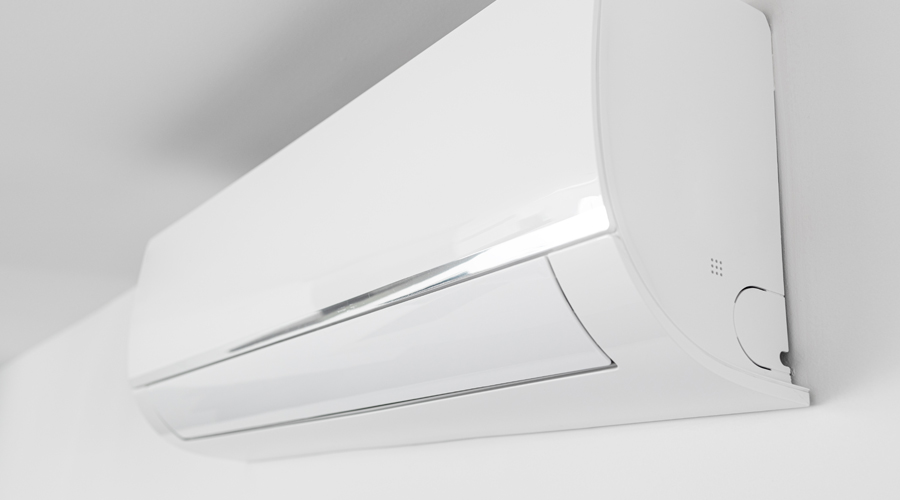
Indoor Unit

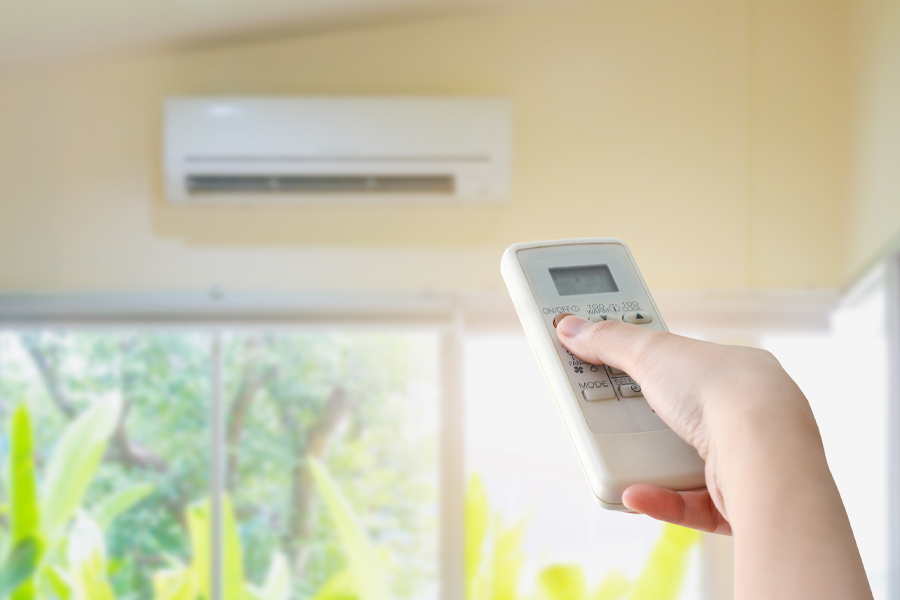
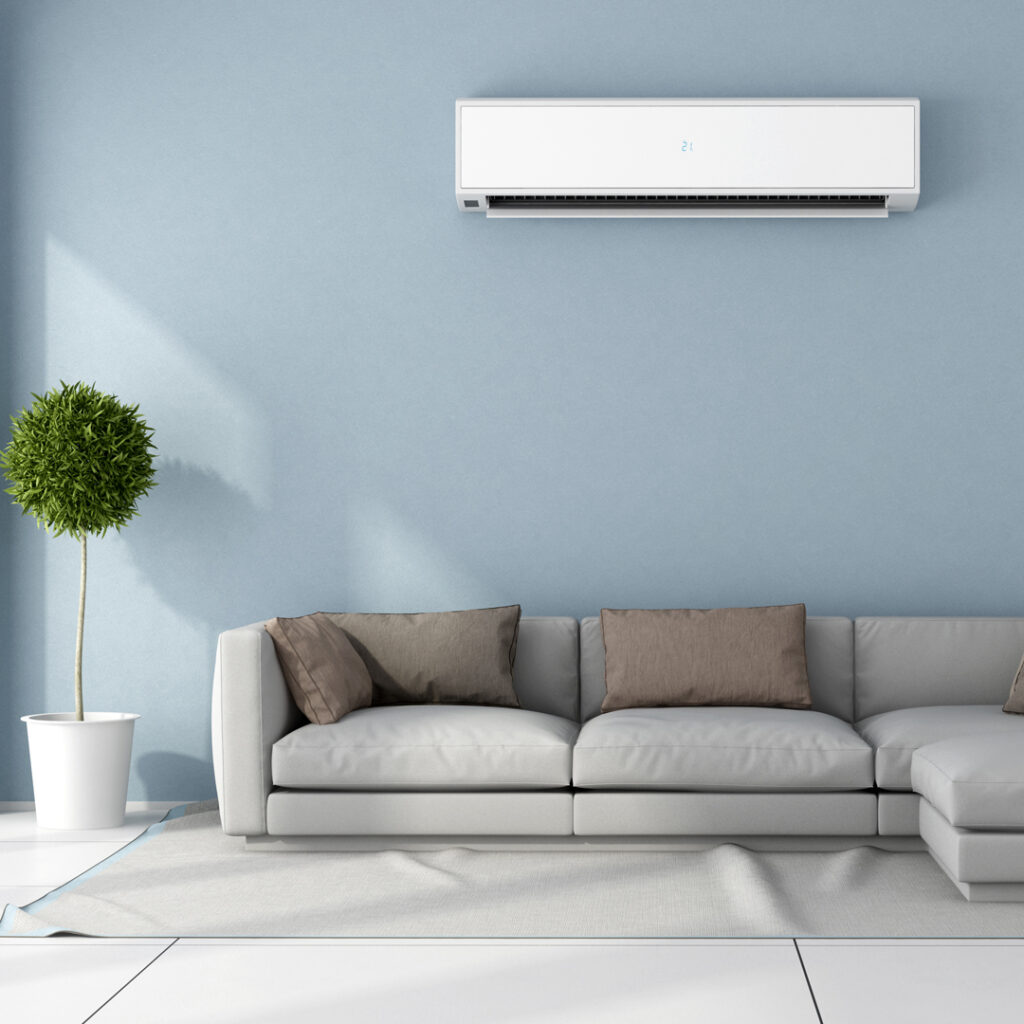
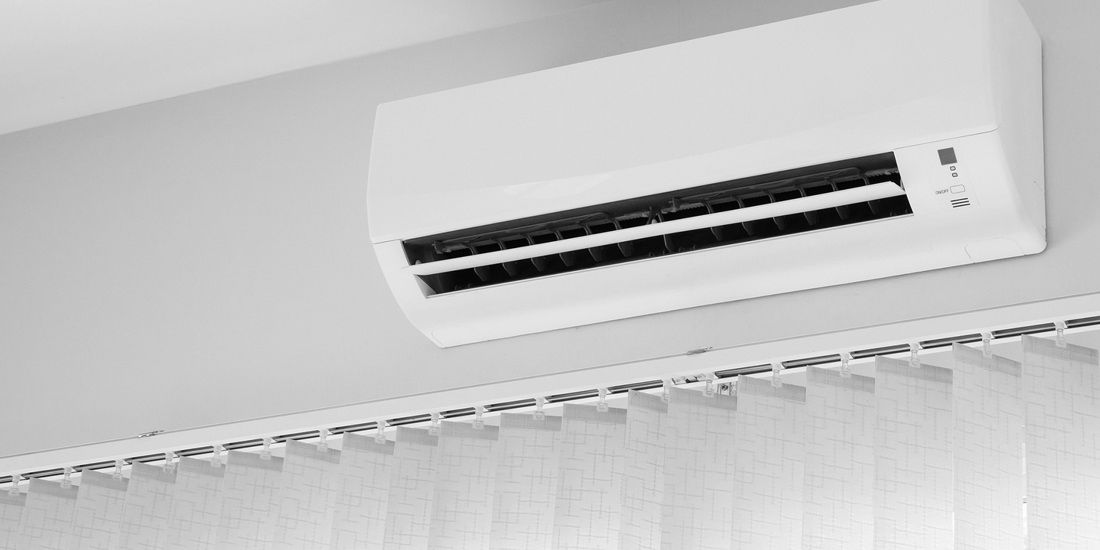
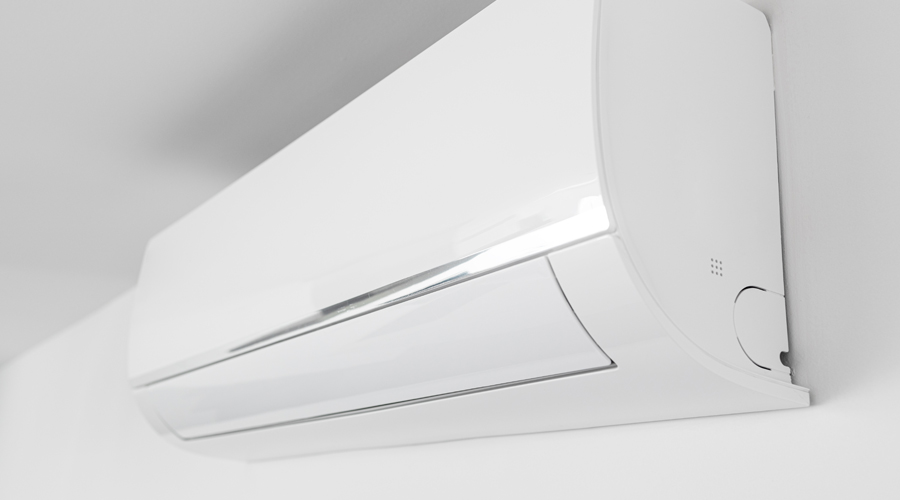
The indoor unit is mounted inside on the wall, and emits cool air into the room. The indoor unit can be controlled with a remote to modulate internal cooling or (depending on the model) heating. The indoor unit is connected to the outdoor unit, which is also known as the condenser or heat exchanger.

Indoor air-conditioning unit

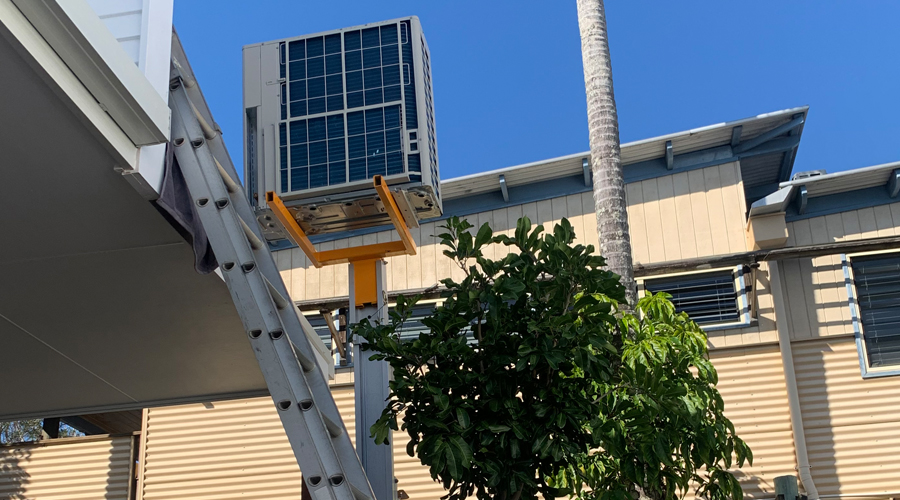
Outdoor Unit

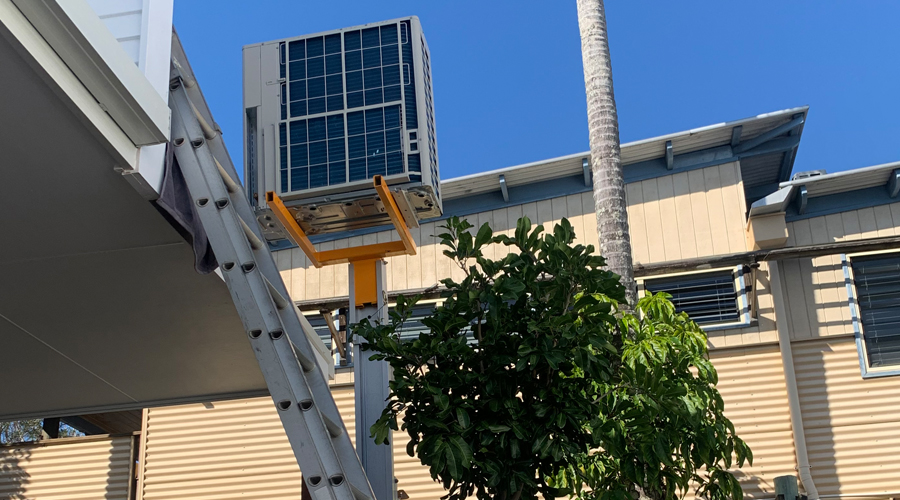
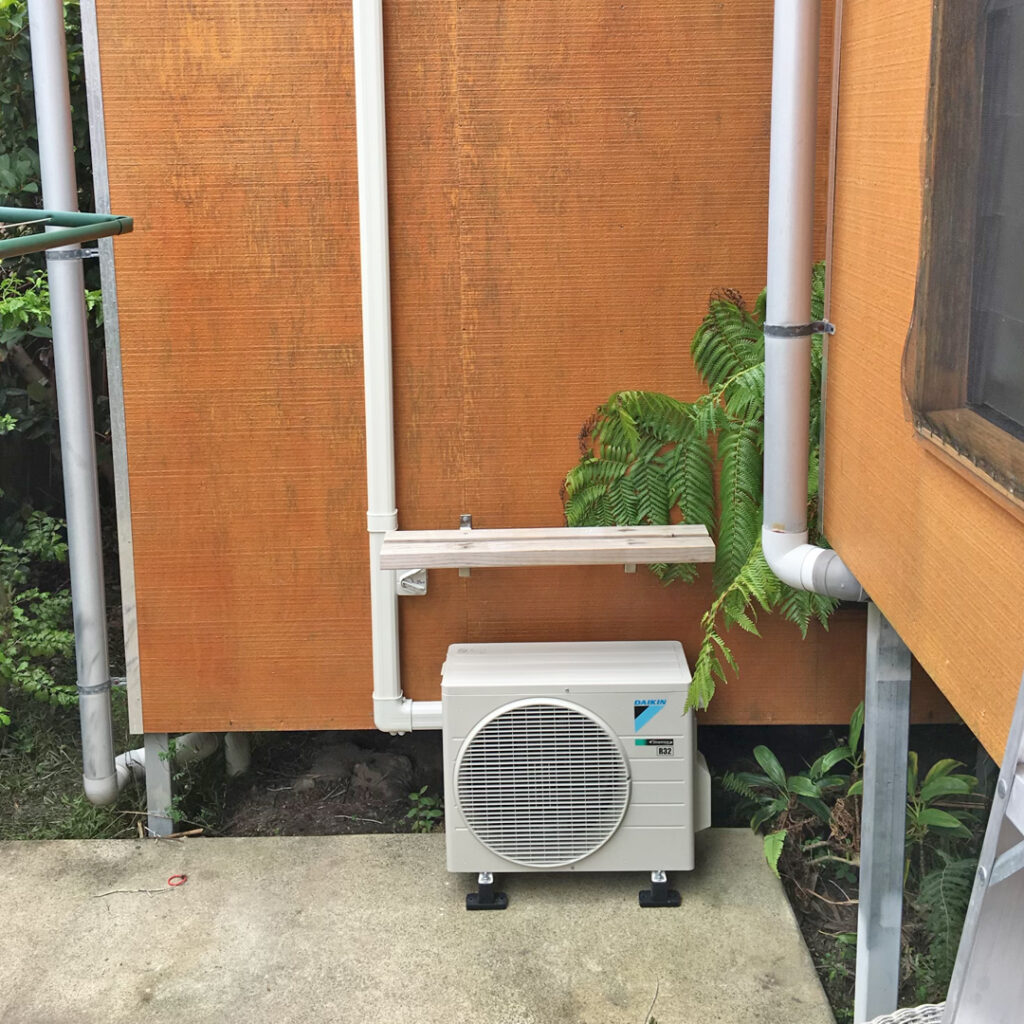
Also known as the condenser or heat exchanger, the outdoor unit sits outside and works together with the indoor unit to produce your air-conditioning.

This image displays the outdoor unit in a split system configuration. You can see the piping that connects the units. This piping is usually more discrete, but it depends on the installation.

Split System Air Conditioner

Single Room Split System Air Conditioning

Single split system air-conditioners, or mini splits, are designed for cooling a single room. These are the go-to for most of our Sunshine Coast residential AC installation jobs. The separated split system design is more efficient and capable than integrated units such as the portable or window air-conditioners mentioned above. They also have a more streamlined appearance, taking into account the capability of the unit, since half of the system resides outside. Split system air-conditioners require installation by a professional electrician.

A key advantage of split systems is that they can be easily retro-fitted to established homes or businesses. This isn’t always possible with a ducted air-conditioner (see below), which are integrated into the actual building, usually at the time of construction.

There are quite a few choices to make when evaluating a split system for your home or business. Our team is here to help. We can guide you to a suitable brand and model for your purposes, and our electricians will install the unit for you.

Split System FAQ

What is the difference between a Split System and and an Air-Conditioner?

A Split System is a type of air-conditioner. There are quite a few different types of air-conditioners – read all about them on this page! A split system gets its name from the fact that it comes in two parts, and indoor and an outdoor unit, which work together to create a complete air-conditioning solution.

Can split systems heat as well as cool?

This capability depends on the model. A reverse cycle air-conditioner can heat as well as cool. If you want this capability in your air-conditioner, make sure the model you’re looking at includes the reverse-cycle feature.

Learn more

  • Split systems with Daikin
  • Split systems with Mitsubishi Heavy Industries
Customer service is always one of our highest priorities

Multi-Head Split System Air Conditioners

A multi-head, or multi-split system air-conditioner is a type of split system for situations where more than one room requires air-conditioning.

With a multi-head split system, a single outdoor unit is linked to multiple indoor units (rather than just the standard single unit). This enables cooling, or heating of multiple, separate rooms.

Another popular option for air-conditioning multiple rooms is ducted air-conditioning. However, ducted air (see below) needs more space to install and is integrated into the building design, whereas split systems, including multi-splits, can be installed more easily because of their agile disposition.

Multi-Split FAQ

Can you heat some rooms and cool others simultaneously?

According to Daikin, this isn’t possible. While individual rooms can be set to different temperatures, they must all be either heating, cooling, or turned off. However, you can apply different degrees of heating OR cooling to all the rooms. Features like this may depend on the model.

Split System Advantages

  • Energy efficiency: Split systems are generally more energy efficient that smaller portable AC units
  • Quiet operation: the design allows for noiser components to be located outside the home
  • Air Quality: split systems generally include filters which help to improve internal air quality
  • Installation flexibility: within available placements, there is a variety of different ways to install split systems
  • No ductwork: split systems include an indoor and an outdoor component – no ductwork
  • Retrofittable: Split systems can be retrofitted
  • Quick installation: Split systems can be quickly installed by a professional

Split System Disadvantages

  • Requires wall space
  • Limited placement options (the indoor and outdoor units work together, so both must be considered in placement)
  • Inflexible: once installed, a split system can not be easily relocated
  • Complex installation: split systems must be installed by professionals
  • Price point: split systems are not the cheapest air-conditioning option available.

Learn more

  • Multi-head split systems with Daikin
  • Multi-head split systems with Mitsubishi Heavy Industries


Floor Standing Air Conditioners

Floor-standing units are like a split system in all regards except that they are mounted on the floor (split systems are mounted on the wall). Otherwise, they’re the same – there is an indoor unit, an outdoor unit, and they can be fitted or retro-fitted to a home or business by a licensed electrician.

Learn more

  • Floor standing systems with Mitsubishi Heavy Industries

Ducted Air-Conditioners

Ducted air-conditioners are an integrated air-conditioning system that is built into the actual structure, usually at the time of construction. They can be used to cool an entire building, and perform large-scale cooling more efficiently than other types of air-conditioners. Ducted systems involve an outdoor unit, an indoor unit (unlike the split system, this indoor unit is tucked away out of sight), and the ducts, which run from the central unit through to other rooms, and which give the system its name.

Ducted systems have a very low internal profile – all of the works are hidden from sight, and the air flows from discreet vents.

Ducted air-conditioning systems are optimal for larger homes or commercial premises with single or multiple rooms. However, because ducted systems are built into the structure, it may be difficult or impossible to retro-fit them.

Mounting a rooftop AC unit in Noosaville

Ducted AC FAQ

Is Ducted AC better than a split system?

Ducted and split systems serve different purposes. While the purpose of a split system is to cool a single room, or in the case of a multi-split up to 5 rooms, Ducted air-conditioning can cool an entire home. Ducted may be a better option if you’re looking to air-condition a larger space, but because it is integrated into the building, usually needs to be included at the time the home is constructed.

Ducted AC Advantages

  • Whole-building capability: Ducted systems can heat your entire home.
  • Neat and tidy: ducted systems are tucked away internally, so they are very discrete
  • Quiet: like split systems, the compressor and fan are outside, keeping it quiet inside
  • Zoning: Ducted systems can create different environments within the home
  • Even distribution: Ducted systems can achieve an even distribution of air through rooms, since air comes from multiple sources

Ducted AC Disadvantages

  • High installation cost
  • Complex installation
  • More difficult to retrofit
  • Inefficient if used incorrectly (i.e. heating / cooling unused rooms)
  • Require regular maintenance
  • Take up more internal space (in wall / roof cavities)
  • Limited flexibility: Ducted systems are a permanent installation and can not be easily modified post-installation.
Make an Air-Conditioning Enquiry

Bulkhead Air-Conditioning Systems

Learn more

  • Ducted systems with Daikin
  • Ducted systems with Mitsubishi Heavy Industries

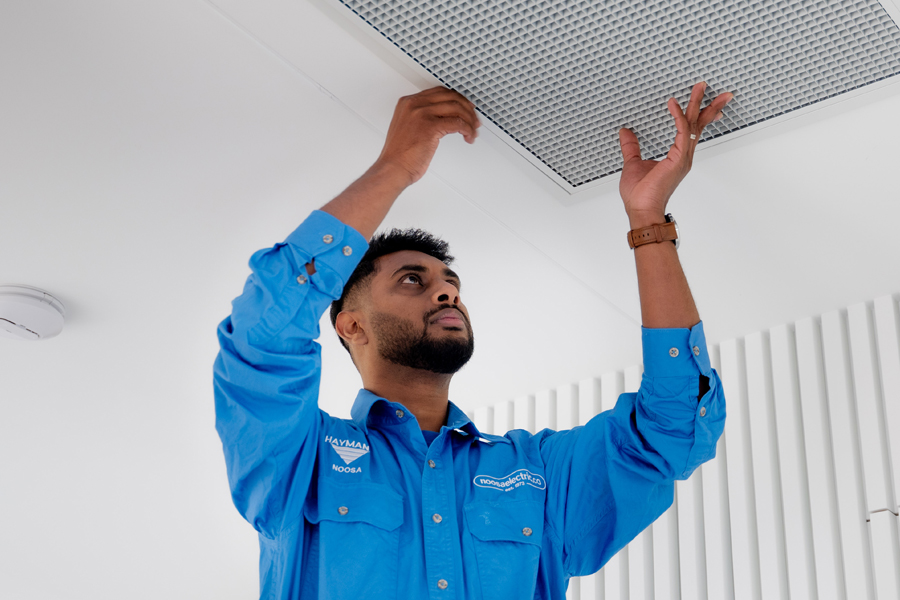
Bulkhead air-conditioning systems are a type of air-conditioner that is installed in a wall or bulkhead. Unlike split systems, where the internal unit is visible, the internal bulkhead unit is tucked away out of sight, emitting cool air into the room via a low-profile grille. Like ducted systems, bulkhead systems are integrated into the structure and their installation generally need to be done as part of a construction or renovation process.

Here’s a handy article on the difference between bulkhead and split system AC.

Learn more

  • Bulkhead systems with Daikin
  • Bulkhead systems with Mitsubishi Heavy Industries

Cassette Air Conditioners

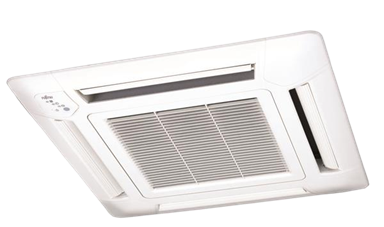
Cassette air conditioners are another unobtrusive type of AC solution, distinguished by the fact that they are located in the ceiling.

This fact enables conditioned air to be generated from a central distribution point (unlike split systems, for example, which are mounted on one wall), achieving immediate 360 degree distribution of cool air around the room. Cassette air conditioners are better suited to light-commercial or commercial applications for this reason.

Fujitsu Cassette Air Conditioner

Learn more

  • Cassette systems with Daikin
  • Cassette systems with Mitsubishi Heavy Industries

Air Conditioner Services Noosa

Our team offers full support for all air-conditioning needs across Noosa and the Sunshine Coast:

  • Sales & Installation – Guidance on the best system for your property.
  • Servicing & Maintenance – Keep your AC running efficiently year-round.
  • Repairs & Upgrades – Prompt and professional service for all AC brands and models.
  • Design Consultation – Customised AC solutions for residential and commercial spaces.

With Noosa Electric Co, you get expert advice, professional installation, and reliable ongoing service. For all your air-conditioning needs in Noosa or the Sunshine Coast, call 07 5449 7133 or email service@noosaelectric.co. Our friendly team is ready to provide advice, quotes, and expert service for your next AC project.

Make an Air-Conditioning Enquiry

Air-Conditioner Features

Air-Conditioning Features

Air-Conditioners come in a variety of styles and capabilities. In this brief article, we look at important features that you should be aware of when reviewing a new air-conditioner for your home or business. This will help you make an informed decision and select an air-conditioner that is suitable for your needs. For all air-conditioning sales, installation, repair and servicing on the northern Sunshine Coast, please contact our team. We provide a complete air-conditioner service, in addition to being approved warranty-repairers for major brands.

Make an Air-Conditioning Enquiry

Energy Efficiency

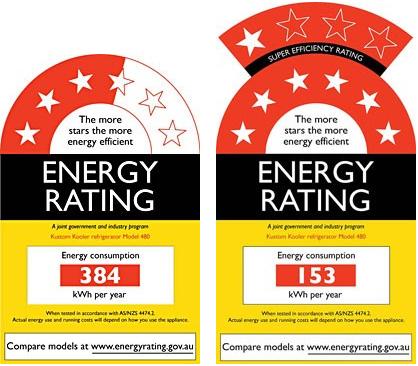
Choosing efficient appliances is important for the environment and the back pocket. Depending on the climate zone, heating and/or cooling can account for 20% to 50% of energy used in Australian homes. [energy.gov.au] That’s quite a lot when you think about tit. The best way to understand the energy-efficiency of an air-conditioner is to evaluate the mandatory energy rating label on the box:

Energy Rating Labels

These labels give immediate insight into the energy-rating of the appliance, and can help you to evaluate the running costs of your air-conditioner in conjunction with the other features it offers.

More Stars on the Label Means:

  1. More Energy Efficiency
  2. Lower Power Bills
  3. Less Damage to the Environment
Air-Conditioning Features

Refrigerant Type: R-32

The type of refrigerant used by an air-conditioner has an impact on both operational efficiency and environmental impact. Air-conditioners heat or cool the room by transferring heat via refrigerant. R-32 is a refrigerant used increasingly as the best commercially available option. It can reduce electricity consumption by approximately 10%, and has a lower environmental impact. [daikin.com]

Learn More:

  • What’s R-32? (Daikin)

Cooling & Reverse Cycle

An important choice to make up front is whether your air-conditioner will be cooling, or reverse-cycle. Here is the difference:

Cooling: This means that the air-conditioner only cools the air.

Reverse Cycle: The air-conditioner can cool and heat the air.

If you’re on the Sunshine Coast and thinking, “I only need to keep cool in summer!”, then please don’t forget that our winters can be pretty chilly. A reverse-cycle air-conditioner is a great way to combat the winter cold, as well as keep you warm in summer.

What’s the Difference Between a Split System & a Reverse-Cycle Air-Conditioner?

These are 2 totally different things. A split system is a type of air-conditioner configuration, and gets its name from the fact that it is made up of two separate components, one inside and one outside. You can read more about split systems here. Reverse-cycle, on the other hand, refers to an air-conditioner mode where the internal air is heated, not cooled. In other words, you can have a split system air-conditioner with a reverse cycle feature.

Air Quality

Air quality is an important, but often overlooked issue, which can be addressed by the right type of air-conditioner. Most known for their abilities to cool or heat rooms, some air-conditioners can also help address air quality, and lessen the impact of related issues including respiratory conditions, allergic episodes, headaches, skin issues, strange smells, and mould growth. To best understand the air-quality capabilities of your prospective air-conditioner, check for options such as filtration, mould-proof operation, auto-cleaning, odour decomposition and bacteria deactivation. Air-conditioners can do much more than simply heat and cool your rooms!

Learn More:

  • How to keep your indoor air quality at its best (Fujitsu)

Connectivity

Appliances are getting smarter and air-conditioners are no exception. While the standard has always been operation via remote control, some AC units can now be operated by app on your phone or via smart home devices such as Google Home. In addition to this type of capability for new units, some brands also sell retro-fitting kits which enables this type of technology to be applied to older units. An example of this is the Fujitsu anywAIR technology Wi-Fi device.

Noise Reduction

Coming to terms with the noise levels associated with air-conditioners is important. Features such as Quiet Operation (Daikin) or Low Noise Mode (Fujitsu) can produce whisper-quiet AC under certain operational parameters. It’s important to understand that air-conditioner noise may be internal or external, depending on the type of air-conditioning unit you’re running and how it is being used. You need to consider both – you may not be able to hear your outdoor unit, but your neighbours may!

Learn More:

  • The noise factor: why it’s important both indoors and out

Humidity Reduction: Dry Mode

If you lived on the Sunshine Coast during the first 4 months of 2022, you may be familiar with the problems associated with mould. Following a particularly rainy period during this time, mould growth was abundant as a result of humidity and a lack of sunshine. Dry mode is one option which is useful for battling mould, and comes as standard on many modern air-conditioners. This mode de-humidifies the room, and makes conditions less favourable for mould growth. In addition, it can be used as a more economical cooling method on days when high humidity is causing discomfort.

Learn More:

  • Tips for Reducing, Managing & Removing Mould

Rust Prevention

Rust prevention is an important consideration on the Sunshine Coast due to proximity to the ocean. For outdoor electrical units such as air-conditioning condensers, the elements can take a toll. Corrosion-resistance treatments are included in some air-conditioner models. We can also apply a rust-prevention application which will help protect your air-conditioner from the elements. Talk to our team to find out more information.

Learn More:

  • Rust Prevention Applications
Make an Air-Conditioning Enquiry

How’s Your IAQ?

How is Your IAQ?
How is Your IAQ?

While it may be invisible, indoor air quality (IAQ) has a big impact on our health and comfort at home. It’s easy to assume the air we breathe is pretty clean – but the truth is, many of us aren’t even aware of the minute microbes and ultrafine particles that we live with every day. Along with more obvious things like cigarette smoke, dust mites and pet allergens, one of the greatest factors to influence indoor air quality is mould. Apart from being unsightly, mould releases microscopic spores into the air we breathe, which can wreak havoc on our health, especially for those prone to allergies. 

Make an Air-Conditioning Enquiry

Banishing mould can be a tricky task, so we’ve gathered our top tips for detecting and eradicating this nasty stuff and improving your indoor air quality for good. 

Tip 1. Assess your ventilation situation
Mould absolutely loves damp environments, so it tends to grow in places where moisture can’t easily escape (like your bathroom, kitchen or laundry). In many cases, you can resolve the issue by improving ventilation through windows or vents.

If natural ventilation in a living or sleeping area is an issue, a good air conditioner or dehumidifier can do the trick, which can draw air from the outside and circulate it inside, reducing the humidity in your home without affecting the temperature.

Tip 2. Don’t let water hang around
Be vigilant, take care to dry your kitchen and bathroom areas thoroughly after you’ve finished using them (mould can grow in as little as 24 hours!). Keeping bathroom exhaust fans running while you’re showering (and for 30 minutes after) is a good idea too.

Tip 3. Take advantage of mould-fighting products
If you’re building a new home or renovating, you’ll be happy to hear there are some mould-resistant products you can use to prevent mould: things like mould-resistant plasterboard and mould-resistant insulation. For existing homes, it can be worth looking into waterproofing paints for problem spots around the house.

Tip 4. Keep an eye on indoor plants
While indoor plants can help improve your indoor air quality by filtering pollutants, they can also provide the perfect breeding ground for mould. To stop this from happening, don’t let excess water stagnate in drip trays when you water. A good tip is adding a dash of natural antifungal substance that can hinder mould growth in the plant soil.

Tip 5. Don’t ‘set and forget’ your air conditioner or dehumidifier.
Regularly cleaning or replacing filters as required is a simple way to keep your unit running at its best, and sticking to a regular servicing schedule can also make a world of difference to your unit’s ability to keep your air clean. Learn more about why air-conditioners should be cleaned here.

Now you’re armed with these tips, why not sort those trouble spots and enjoy fresher air every day? Check out the best time of year to get your air-conditioner serviced here, or contact our team for any enquiries. We look forward to assisting you:

Make an Air-Conditioning Enquiry
  • « Go to Previous Page
  • Page 1
  • Page 2

Primary Sidebar

AC Services

  • AC Services
  • AC Cleaning, Servicing & Maintenance
  • AC Sales & Installation
  • AC Repairs
  • AC Upgrades
  • AC Design

Air-Conditioning Articles

How is Your IAQ?

How’s Your IAQ?

Why Air-Conditioners Should Be Cleaned

Bulkhead Vs Split System AC – What’s the Difference?

Air-Conditioning Offers

When is the Best Time of Year to Clean my Air-Conditioner?

NECO Insights: Common Air-Conditioner Installation Problems

Latest Articles

Smoke Alarm Placement: Most QLD Homes Get This Wrong (And 2027 Makes It Law)

Electrician updating a smoke alarm

Smoke Alarm Reminder

Noosa EV & Electrify Everything Expo 2026

Noosa Ev & Electrify Everything Expo 2026

Air Conditioner Service Noosa — Keep Your System Running at Its Best

Noosa Electric Co. acknowledges the Traditional Custodians of the land on which we live and work. We pay our respects to the Elders past, present and emerging, for they hold the memories, the traditions, the culture and hopes of Aboriginal and Torres Strait Islander peoples.

Footer

Handy Links

  • Electrical Services
  • Air-Conditioning Services
  • Noosa Solar Solutions
  • Electrification
  • Appliance Services
  • Refrigeration Services
  • Smoke Alarms
  • Spare Parts

About Us

  • About Us
  • Our Team
  • Our History
  • Electrification
  • Environmental Policy
  • Careers
  • Terms and Conditions
  • Service Information

Business Information

Phone: 07 5449 7133
Email: service@noosaelectric.co
Postal Address: PO BOX 1223, Noosa Civic Post Office, QLD 4566
Hours:
Mon-Fri: 8:30-4:00
Sat-Sun: Closed

tt

Copyright 2021 Noosa Electric Co | Terms & Conditions