
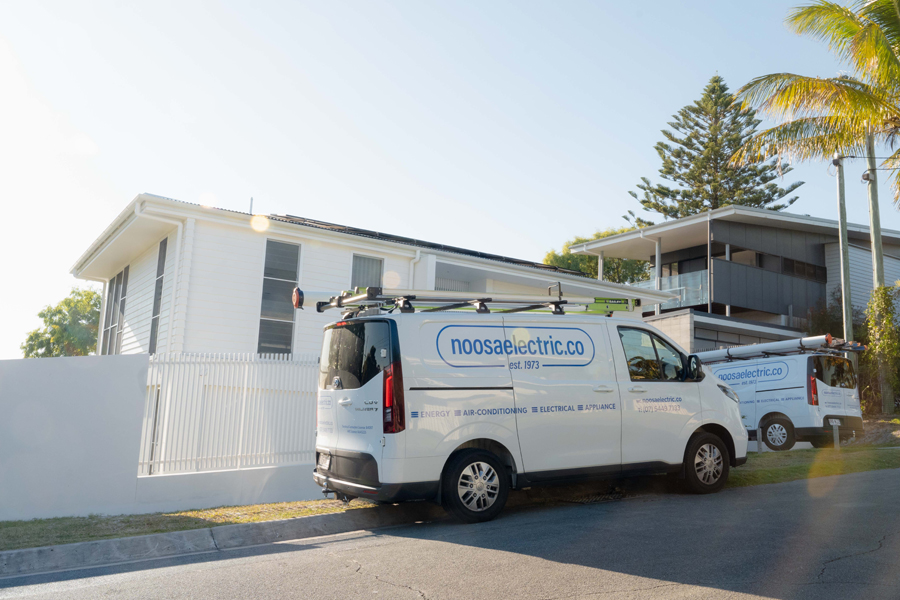
with Noosa Electric Co — Trusted since 1973
Quick answer: Queensland’s smoke alarm legislation requires every home — owner-occupied included — to have interconnected photoelectric smoke alarms in every bedroom, in hallways connecting bedrooms, and on every level of the house by 1 January 2027. Landlords and homes sold or newly leased already had to meet this standard from earlier deadlines. If your alarms are older, wired to a single circuit, or use ionisation sensors, they almost certainly won’t meet the new requirements.
If you own a home anywhere between Noosa and Cooroy, there’s a good chance your smoke alarms don’t yet meet Queensland’s current legislation — and the final compliance deadline is closer than most homeowners realise. The changes stem from amendments to the Fire and Emergency Services Act 1990, rolled out in stages since 2017, with the last and largest group of properties (owner-occupied homes) required to comply by 1 January 2027. Below, we break down exactly what’s required, why the rules changed, and how a Noosa smoke alarm electrician can help you get ahead of the deadline.
Why Queensland Changed the Rules
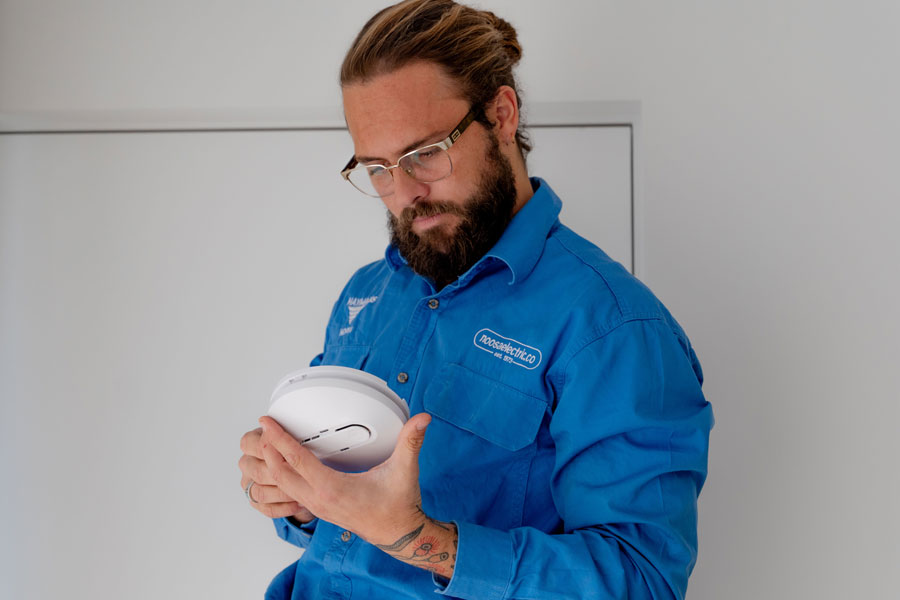
The legislation followed a series of Queensland house fire fatalities where investigations found existing smoke alarms — often old, single-station, or fitted with ionisation sensors — either failed to activate in time or weren’t loud enough to wake sleeping occupants in another room.
Photoelectric alarms respond measurably faster to smouldering fires (the type most common in house fires that start overnight) than ionisation alarms, and interconnected smoke alarms mean every unit in the house sounds together, not just the one nearest the fire. Our article on the importance of smoke alarms covers the fire-safety data behind these reforms in more depth, and our news piece on why smoke alarms matter walks through several real cases that shaped the legislation.
What the Legislation Actually Requires
Under the current standard — outlined in full on our smoke alarm legislation changes page — a compliant home needs:
- A photoelectric smoke alarm (AS 3786-2014 compliant) in every bedroom
- An alarm in every hallway that connects bedrooms to the rest of the house
- At least one alarm on every storey, even where there are no bedrooms
- All alarms interconnected, so that one activating triggers every other alarm in the house
- Alarms that are hardwired, or powered by a non-removable 10-year lithium battery smoke alarm unit if hardwiring isn’t feasible
- No smoke alarms older than 10 years from their manufacture date, regardless of whether they still appear to function
This is a meaningfully higher bar than the single battery-powered alarm in a hallway that satisfied older rules. Many Sunshine Coast homes built before the early 2000s have exactly that setup, which means they fall short on at least two or three of the points above.
Placement Rules Most Homes Get Wrong
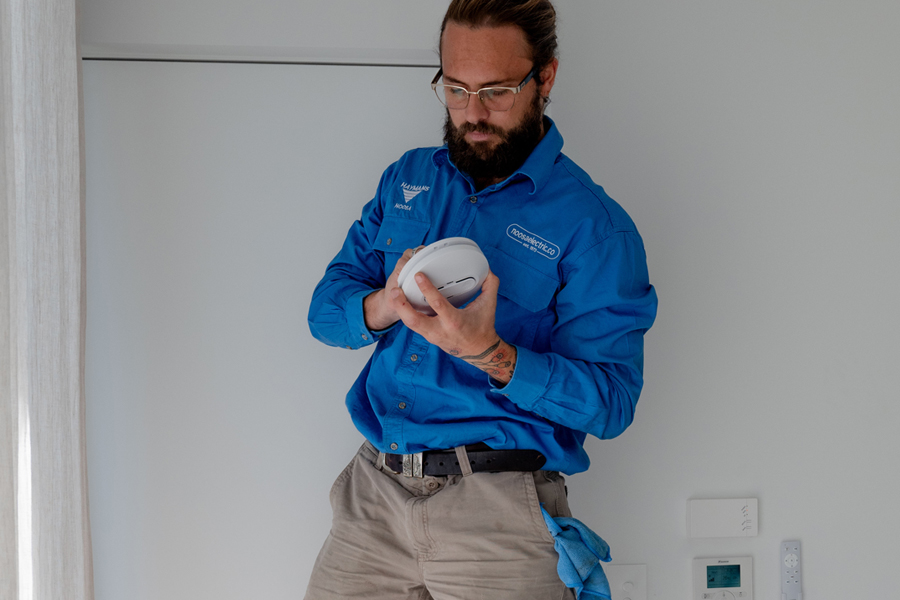
Even homeowners who’ve upgraded their smoke alarms often get placement wrong, which is enough on its own to fail compliance. Our guide on smoke alarm placement mistakes covers the most common errors we see across Noosa and the wider Sunshine Coast — alarms mounted too close to corners or air-conditioning vents (which delays smoke reaching the sensor), missing units in secondary bedrooms, and hallway alarms positioned too far from the bedroom cluster they’re meant to protect.Key Deadlines by Property Type
The rollout has happened in stages, and it’s worth knowing which one applies to your situation:
- New dwellings and substantially renovated homes — compliant since 1 January 2017
- Homes sold or newly tenanted — compliant since 1 January 2022
- All other owner-occupied dwellings — must comply by 1 January 2027
If you’re planning any renovation work, it’s worth checking compliance now rather than waiting, since a renovation can trigger the earlier deadline retroactively. Our electrical services page covers how smoke alarm upgrades are typically bundled with broader wiring and switchboard work during a renovation.
Interconnection: Wired vs Wireless
Interconnection can be achieved two ways — hardwired cabling between alarms, or wireless RF-linked units that communicate without new cabling. Hardwired interconnection is generally more reliable in larger homes with thick or double-brick walls where RF signal can drop out between rooms, but it requires ceiling access and is more disruptive to install in an existing home.
Wireless interconnected smoke alarms have closed most of the reliability gap in the last few years and are now a common choice for retrofits where re-wiring isn’t practical. Our smoke alarm sales and installation team can assess which approach suits your home’s layout and existing wiring before recommending one over the other.
Why is my smoke alarm beeping?
A short, intermittent beep from an existing alarm is one of the most common reasons homeowners contact a smoke alarm electrician, and it’s worth addressing regardless of the 2027 deadline. In most cases it signals a low battery, dust buildup inside the sensor chamber, or an alarm approaching its 10-year end-of-life date. Our detailed guide on why smoke alarms beep breaks down each cause and when a beeping alarm should be treated as a compliance issue rather than a simple battery swap.
What Happens If You Don’t Comply
Non-compliance itself isn’t typically enforced through random inspections of owner-occupied homes, but it becomes a real issue at three points: when selling a property (non-compliant alarms can delay or complicate settlement), when leasing (landlords face fines for non-compliant rental properties), and — most importantly — in the event of a house fire, where insurance claims can be affected if alarms are found not to meet the legislated standard at the time of the incident. Given the average cost of a full compliance upgrade is a fraction of a single insurance dispute, most homeowners choose to get ahead of the 2027 deadline rather than wait.
How to Check If Your Home Is Compliant
A straightforward way to check is to look at three things: whether alarms are dated (check the manufacture date printed on the back of the unit), whether every bedroom has its own alarm, and whether pressing the test button on one alarm triggers every other alarm in the house. Our article on whether your smoke alarms meet current legislation walks through a full self-assessment, and if any of those checks fail, our smoke alarm compliance testing service covers a professional version of the same assessment.
Getting an Upgrade Done Before 2027
Because 2027 applies to every remaining owner-occupied home in Queensland, electricians across the Sunshine Coast are expecting a significant rise in bookings as the deadline approaches — the same pattern seen ahead of the 2022 rental deadline. Booking early avoids both the scheduling crunch and any last-minute compliance scramble. Noosa Electric Co. has serviced homes across Noosaville, Tewantin, Cooroy, Pomona, Peregian Springs, and Peregian Beach since 1973, and our smoke alarm electricians are already booking compliance upgrades well ahead of the 2027 cut-off.
Frequently Asked Questions
All owner-occupied dwellings must be fully compliant by 1 January 2027. Rental properties and homes sold since 2022 are already required to meet the standard.
The legislation requires photoelectric smoke alarms compliant with AS 3786-2014, interconnected so all alarms trigger together, and either hardwired or powered by a non-removable 10-year lithium battery.
Yes, wireless interconnected photoelectric alarms satisfy the legislation provided they meet the same Australian Standard and genuinely interconnect. They’re often the more practical choice for retrofitting an existing home.
Hardwired smoke alarm installation must be carried out by a licensed electrician. Battery-only interconnected units can sometimes be installed by a competent person, but a licensed assessment is the safest way to confirm full compliance.
Enforcement mainly comes into play at sale, lease, or in the event of a fire, where non-compliant alarms can affect insurance outcomes. There’s no cost benefit to waiting, since the required equipment and installation cost is the same whether it’s done now or under time pressure closer to 2027.
Book Your Smoke Alarm Compliance Check
Don’t wait for the 2027 deadline to find out your home falls short. Visit our smoke alarms page to learn more, use our smoke alarm compliance check tool to see where your home stands, or head straight to online bookings to arrange a compliance check with a licensed Noosa Electric Co. electrician.