
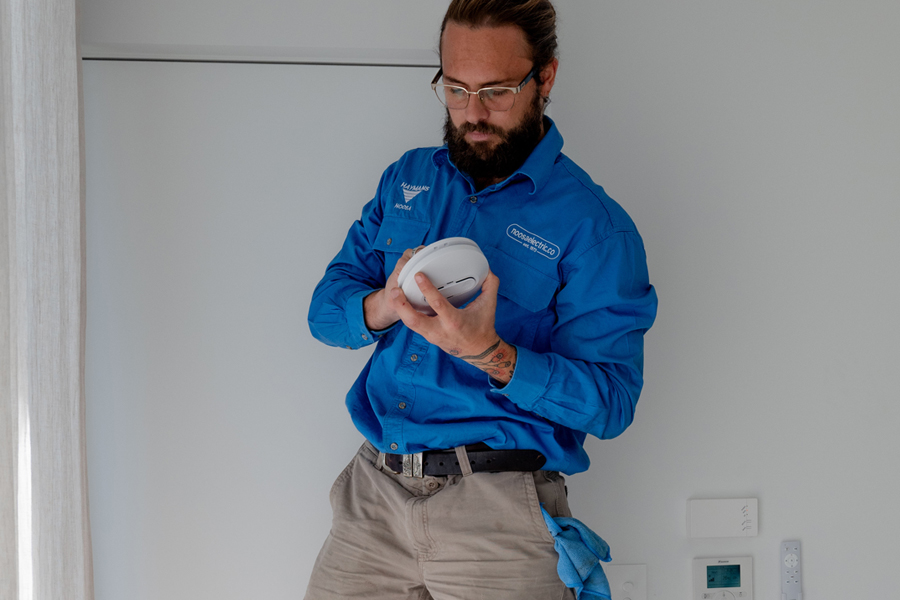
with Noosa Electric Co – Trusted since 1973
Quick answer: Queensland law requires at least one interconnected photoelectric smoke alarm in every bedroom, in the hallways connecting bedrooms to the rest of the home, and on every storey. A typical three-bedroom, single-storey home needs a minimum of four alarms. All existing Queensland homes must comply by 1 January 2027.
Working out how many smoke alarms your home needs comes down to floor plan, not floor area. Queensland sets the count by where bedrooms, hallways and storeys sit. With the final stage of the state’s smoke alarm legislation reaching every existing home on 1 January 2027, getting the number right matters for safety and for smoke alarm compliance. This guide explains the rule, works through common layouts and shows what each alarm must be.
What does Queensland law say about the number of smoke alarms?
Queensland sets smoke alarm numbers by location rather than a fixed total. Under legislation that began phasing in on 1 January 2017, a compliant alarm must be installed:
- In every bedroom
- In the hallways connecting bedrooms to the rest of the dwelling
- On every storey, including levels with no bedrooms
These rules apply to private homes, townhouses and units. A two-bedroom unit with a short hallway needs fewer alarms than a five-bedroom, two-storey house.
How many smoke alarms do common home layouts need?
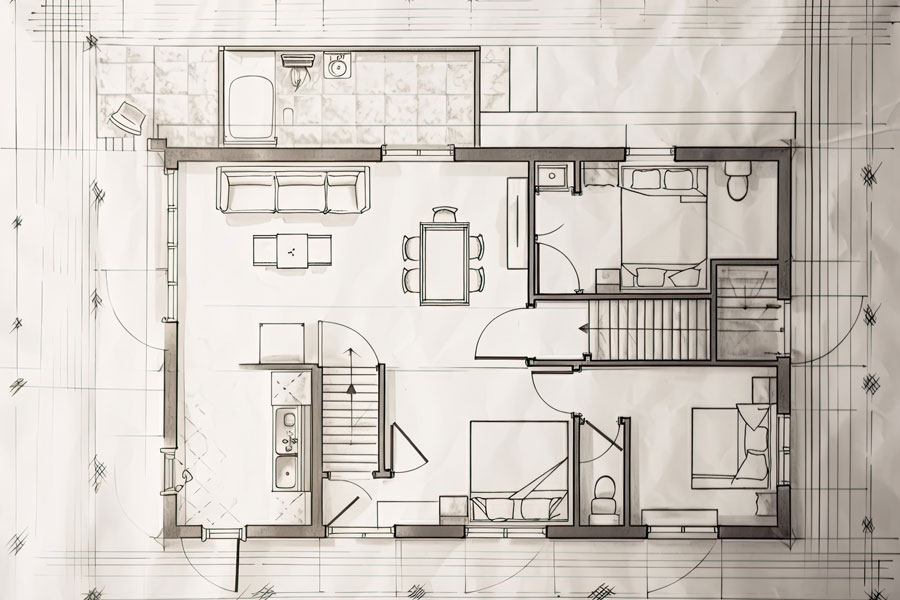
Here are the minimums for typical layouts, assuming one hallway per bedroom level:
| Home layout | Minimum alarms |
|---|---|
| 2-bedroom unit, one hallway | 3 (2 bedrooms + 1 hallway) |
| 3-bedroom single-storey home | 4 (3 bedrooms + 1 hallway) |
| 4-bedroom single-storey home | 5 (4 bedrooms + 1 hallway) |
| 4-bedroom two-storey home, all bedrooms upstairs | 6 (4 bedrooms + upstairs hallway + 1 downstairs) |
These are minimums. A floor plan with two separate bedroom hallways needs an alarm in each. A home with a living area on a third level needs one there too.
Why interconnection matters
Interconnected smoke alarms are linked so that when one detects smoke, every alarm in the dwelling sounds at once. This matters because a fire in a lounge room can be silent to someone asleep in a bedroom at the other end of the house. When every alarm sounds together, occupants are warned wherever they are.
Any method that makes all alarms sound together is acceptable, including hardwired and wireless systems. Every alarm in the dwelling must be interconnected with every other one. A stand-alone alarm left outside the network does not meet the rule.
What must each smoke alarm be?
Meeting the count is only half of smoke alarm compliance. From 1 January 2027, each alarm must:
- Be a photoelectric smoke alarm with no ionisation sensor
- Comply with Australian Standard AS 3786:2014, marked on the alarm body (you may need to remove the mounting bracket to see it)
- Be interconnected with every other alarm in the dwelling
- Be either hardwired to the mains with a backup power source, or a sealed alarm with a non-removable 10-year lithium battery
Hardwired smoke alarms must be installed by a licensed electrician. Sealed 10-year battery alarms can be installed by the property owner. Our team handles smoke alarm sales and installation across the region.
When do the rules apply to your home?
The Queensland smoke alarm legislation was introduced in stages:
- 1 January 2017: new and substantially renovated homes
- 1 January 2022: homes being sold, leased or re-leased
- 1 January 2027: all remaining existing homes, townhouses and units
Smoke alarm laws for 2027 are the final stage. If you own your home and haven’t upgraded since the older rules, the deadline applies to you. In rentals, the landlord is responsible for installing compliant alarms. Our overview of how the smoke alarm laws are changing on the Sunshine Coast covers the full timeline.
What if your home doesn’t fit a standard layout?
Not every home has a neat hallway. If the standard location isn’t possible, an alarm can go in another place that still provides a warning. That judgement is best made on site. A licensed electrician can check your layout against the requirements and confirm the right count and positions.
You can start with our smoke alarm compliance check. For a full assessment of your existing alarms, book smoke alarm compliance testing.
Smoke alarm help from your local Sunshine Coast electrician
Noosa Electric Co. has serviced the Sunshine Coast since 1973. Our licensed electricians check, replace and install alarms in homes across the region, including Noosaville and Tewantin. We count the alarms your layout needs, confirm each one is photoelectric and AS 3786:2014 compliant, and make sure they’re interconnected before we leave.
Frequently asked questions
No. The legislation targets bedrooms, connecting hallways and each storey rather than every room. You can install more than the minimum, but every alarm in the home must be interconnected.
At least one on each storey, plus one in every bedroom and in the hallways connecting the bedrooms. A four-bedroom home with all bedrooms upstairs needs a minimum of six: four in bedrooms, one in the upstairs hallway and one downstairs.
No. Compliant alarms must be photoelectric and must not contain an ionisation sensor. Expired or faulty alarms in existing homes have needed replacing with photoelectric models since 2017, and the interconnection requirement applies to all existing homes from 1 January 2027.
The landlord. They must install alarms that meet the legislation. Homes leased or re-leased since 1 January 2022 have already needed interconnected photoelectric alarms.
Check for the AS 3786:2014 marking on the alarm body, confirm it is photoelectric, and confirm every alarm sounds when one is activated. Our guide on whether your smoke alarms meet the current legislation walks through each check.
Get your smoke alarms compliant before 1 January 2027
Don’t leave it to the last month. Call Noosa Electric Co. today for fast, reliable service across the Sunshine Coast, or see our smoke alarm services to book a compliance check or upgrade.